
They say the two happiest days of a boat owner’s life are the day they buy it and the day they sell it. But let’s be real—the day you buy it usually involves a lot of Mountain Home sunshine and a delusion that “it won’t be that expensive.”
Spoiler alert: It is.
If you’re planning to cruise around Jordan Marina or drop an anchor near Sand Island, you need more than just a life jacket; you need a financial reality check. In 2026, owning a boat on Norfork Lake isn’t just about the MSRP on the sticker. It’s about the “hidden snags” that only locals and seasoned guides understand. Before you sign that title, run the numbers through our Boat Ownership Cost Calculator because the dealer won’t tell you what I’m about to.
The Entry Fee: It’s Not Just the Boat
Buying the boat is like buying the ticket to the theater—it doesn’t include the popcorn, the parking, or the seat. On Norfork Lake, your “seat” is a slip at Tracy Ferry or Henderson Marina, and those aren’t getting any cheaper.
- The Sticker Price Delusion: You see a used tri-toon for $35,000. Great. Now add taxes, registration with the state of Arkansas, and the immediate “I need new electronics” fever.
- The Insurance Trap: This isn’t a swimming pool. Norfork is deep, clear, and full of submerged timber. If you don’t have comprehensive coverage for “lower unit vs. rock,” you’re playing a dangerous game.
Norfork Lake Operating Costs (The 2026 Reality)
Operating a boat near Mountain Home involves specific local variables. You aren’t just fighting the wind; you’re fighting the Current Norfork Lake Level. When the water is low, your fuel consumption increases as you navigate carefully around emerging islands. When it’s high, you’re fighting current near the Dam.
| Expense Category | Annual “Real World” Estimate | Why Norfork is Different |
| Storage/Slip Fees | $2,800 – $5,500 | Jordan Marina slips are prime real estate. You pay for the proximity to the dam. |
| Fuel (The Thirst) | $1,500 – $4,000 | Pontoons have the aerodynamics of a brick. Fighting the Norfork current sucks gas. |
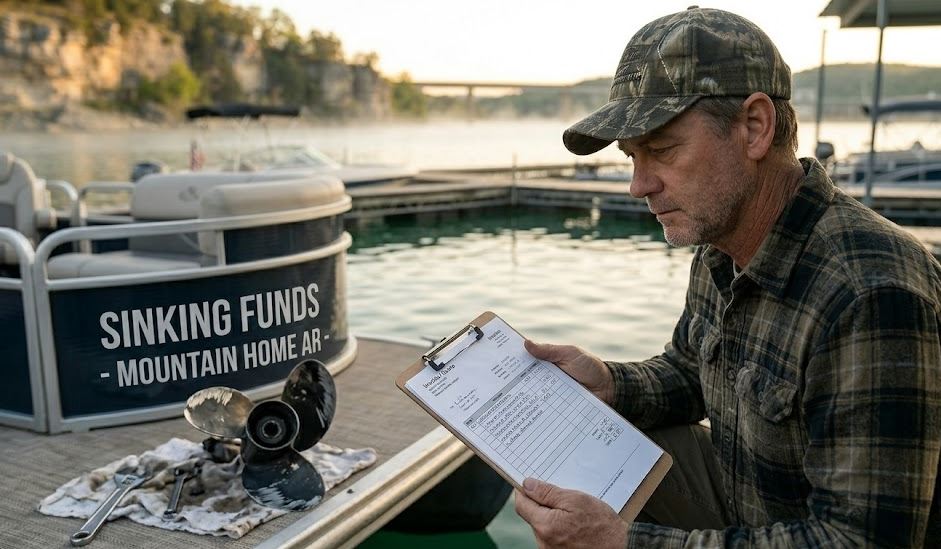
| Maintenance | 10-15% of Boat Value | Submerged snags near Quarry Park Point love to eat propellers for breakfast. |
| Winterization | $400 – $900 | Arkansas winters aren’t a joke. If you don’t winterize, your engine block becomes a very expensive paperweight. |
The “Sinking Funds” Anecdote
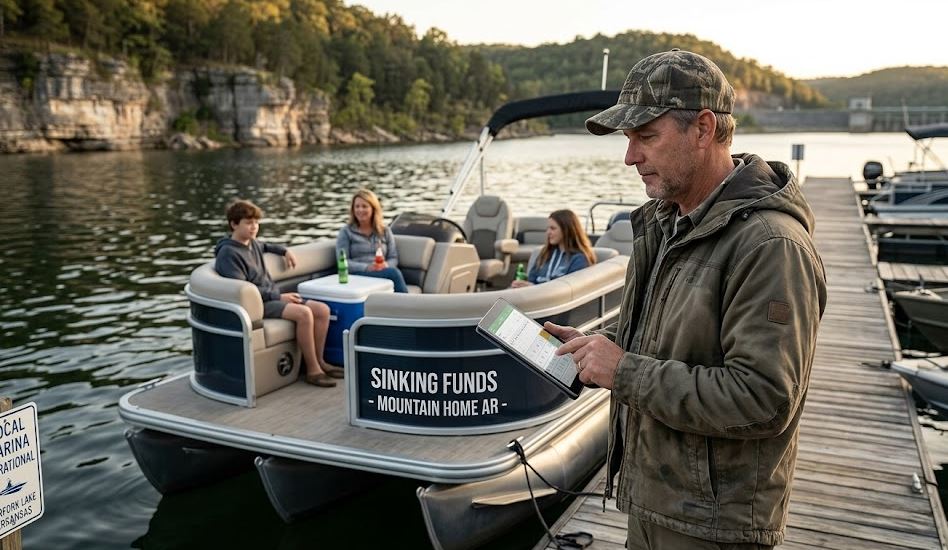
I remember a buddy who bought a “steal” of a bass boat near Hickory Creek. He spent $12,000 on the boat and $8,000 in the first six months just keeping it from becoming a permanent reef. He eventually named it “Sinking Funds”—a name that earned him plenty of laughs at the dock but zero sympathy from his bank account.
If you aren’t prepared for the “Trout Whistle” (the sound of money leaving your pocket), you might be better off sticking to our Boat Rentals. You get the fun, we get the headache.
Take a Stand: In my expert opinion, unless you are on the water at least 30 days a year, owning a boat in 2026 is a luxury, not a utility. It is a “smart” investment only for your mental health—not your 401k.
Is it Worth It?
Despite the bills, the maintenance, and the stress of checking the generation schedule every morning… yeah, it is. There is no price tag for a sunset near Robinson Point with your family on a deck that you own.
Just do it with your eyes open. Check the levels, run the calculator, and maybe pick a name that warns the other boaters at the marina that you know exactly what you’ve gotten yourself into.
The Final Verdict: Trust the data, not the dealer. For more technical navigation tips, check the Official USACE Norfork Lake Info and stay afloat.