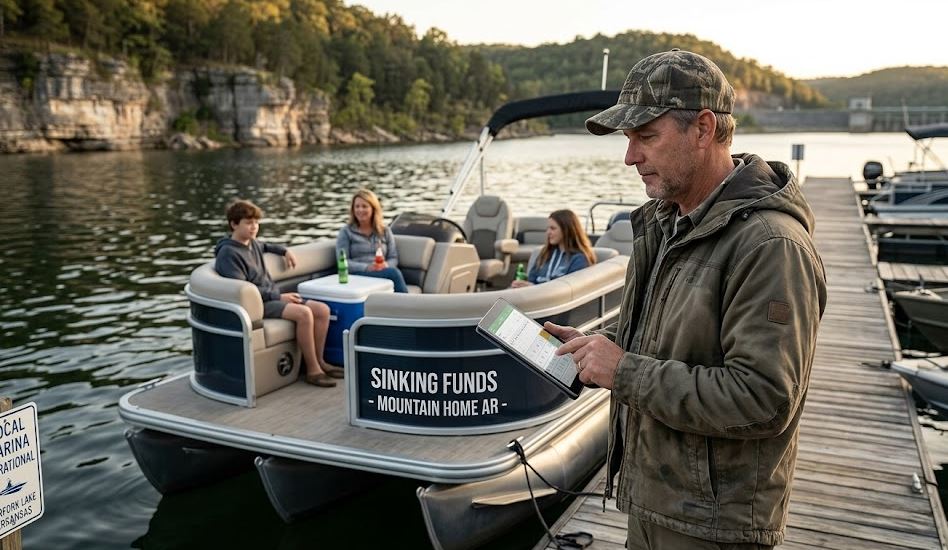

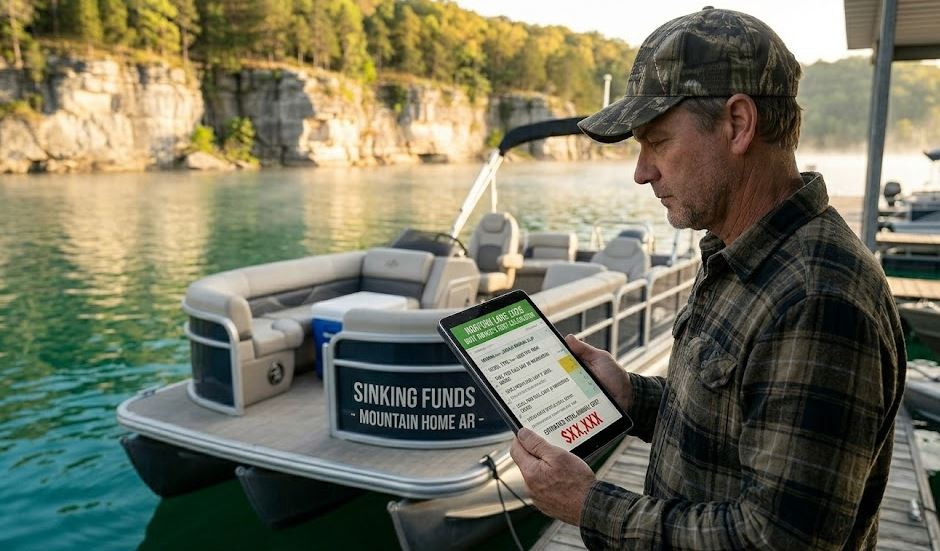
Naming your new vessel “Sinking Funds” might be funny on the dock (and we have an excellent list of 101 Funny Boat Names if you’re stuck), but naming your financial reality is far more critical. Before you sign that 2026 sales contract, you must sit down with our calculator and calculate the true local expense.
A generic national “boat calculator” is worse than useless; it’s dangerously misleading. On Norfork Lake, the math changes. Our localized, specialized 2026 calculator is your best friend because it forces you to make a choice: either buy it with your eyes wide open or just rent a high-end tri-toon from our Boat Rentals page and save yourself the nightmare.
The Problem: Why Your “Cheap” Budget is Fiction
“They say the two happiest days of a boat owner’s life…” yeah, we know. But you only get that third day of realization when you actually run the local numbers.
Most national calculators ignore critical local variables. In my experience wade-fishing these tailwaters, a national average doesn’t account for the unique costs near Jordan Marina vs. Panther Bay. Our calculator requires brutally honest inputs.
Step 1: Choosing Your Vessel and Local Access
Your Norfork Lake journey begins with two massive, connected decisions: What are you buying, and where are you keeping it? These inputs define 80% of your annual cost. A national calculator generalizes; we specialize.
Marina Specific Costs: The Reality Check (Estimated 2026)
| Cost Category | Estimated Local Cost (Annual, 2026) | Local Authority Insight (Why it Matters @ Norfork) |
| Marinas (Slip/Storage) | $3,500 – $6,000+ | Locals know slips at Jordan Marina near the dam cost significantly more than a dry storage unit near Panther Bay. Our calculator compares actual 2026 estimates for specific marinas. |
| Seasonal Slips | $3,000+ | Locals also know that if you skip the slip near Tracy Ferry Marina and choose dry storage a few miles up the road, you save $3k annually—but you add an hour to every trip. |
ing the Numbers (The Local Factors)
Once you define your vessel and marina, you must use brutally honest inputs for fuel and maintenance.
The ‘Local Snags’ (Hidden Repairs)
Our calculator includes a specialized factor for local snags. Norfork is a deep lake with submerged trees (snags) and a fluctuating USACE lake level. Hull damage is real. A national calculator generalizes; in my experience, a generic maintenance average won’t save you when your new prop is shredded on a submerged tree near Quarry Park Point. You cannot skimp on insurance, either.
- (Errata/Sarcasm): Or you could always buy that massive, shiny, triple-tube tri-toon for your mid-life crisis (we just updated our comprehensive Norfork Lake Pontoon Boat Ownership Costs (2026 Edition) guide for that exact choice) and just… never use it. Then your fuel cost is $0. Smart.
Pro Tip: Having spent countless mornings wade-fishing and Sprinting below the Norfork Dam access, and having analyzed the unique economic dynamics of keeping a vessel afloat near Tracy Ferry Marina… I’ve seen the financial confusion firsthand. Take it from a local: generic data leads to expensive regret.
Use Our Norfork Lake Cost Calculator
Download our localized 2026 spreadsheet calculator and run the numbers honestly. Compare the costs of a used cruiser at Quarry Park Point vs. a new tri-toon near Jordan Marina. You can even link to the Official USACE Little Rock District data to see current lake levels and generation schedules, because that determines when you can actually use your new vessel.
A boat is a financial trap if you buy the national dream. It is a brilliant local reality if you buy the Norfork Lake data first and know your specific marina costs. Use the calculator. Then, maybe, get ready to find a name from our list.