

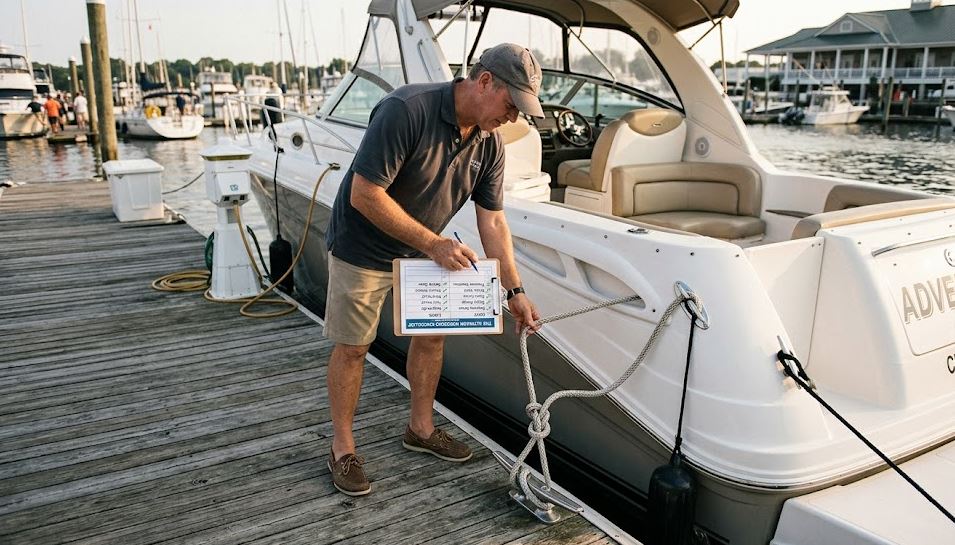
Friday is here. The cooler is packed, the weather is on your side, and you’re dying to cast off. But wait… when was the last time you checked your dock cleats or the bottom of the bilge?
To avoid a weekend disaster, your pre-departure checklist must include: checking engine oil and transmission fluid levels, visually inspecting the bilge for water or fuel, testing the main batteries, and checking for tension and wear on your dock’s mooring lines.
Let me give you the hard truth right now: most on-water tows happen because of electrical failures or running out of gas. Completely absurd mistakes, right?
I remember getting everything ready for a weekend trip down at Norfork Lake. We went to turn the key and… nothing. Dead. Someone (I won’t name names) had left the VHF radio on all week. Saturday ruined because we didn’t do a 15-minute check the day before.
Don’t be that guy. Let’s get straight to it.
🚤 Part 1: The Quick Boat Checklist
This preventative routine shouldn’t take you more than 15 minutes. That is the exact time separating an epic day on the water from spending the afternoon waiting for a towboat under the blazing sun.
For quick digestion, here is your express diagnostic table:
| Component | What to look for exactly | Ideal State (Check ✅) |
| Engine Oil | Color and level on the dipstick. | Golden/light brown, sitting right between MAX and MIN. |
| Bilge Pump | Manual and automatic operation. | Activates instantly with no grinding noises. |
| Batteries | Corrosion on terminals and charge. | Clean terminals, reading above 12.4V. |
The Heart of the Boat: Mechanics and Fluids
- Inspect the bilge: A little water is normal—especially if it rained—but if you see a floating rainbow down there, you have an oil or fuel leak. Fix that before turning anything on.
- Filters and separators: Drain a little fuel from the water separator. If you see water in the clear bowl, it’s time to purge.
Electronics and Maritime Safety
- Lights and Navigation: Turn on your port, starboard, and stern lights. You never know if the party will stretch past sunset.
- Vital gear: Life jackets for every passenger and unexpired flares. This isn’t a suggestion. In fact, taking a quick look at the US Coast Guard statistics and regulations will quickly cure your urge to play it cool without safety gear.
⚓ Part 2: The Forgotten Hero (Your Dock and Moorings)
Almost everyone babies their fiberglass hull, but completely ignores the dock it rests on. Rookie mistake. Your slip is your boat’s first line of defense.
Lines and Cleats
- Mooring lines don’t last forever. The sun, salt, and constant tension eat them alive. Check every inch looking for fraying or extreme stiffness.
- Pull on the cleats: Make sure the hardware is still firmly bolted to the wood or concrete. If there’s any wiggle room, the next storm will rip the entire cleat out.
Fenders and Power Connections
- Fender (bumper) placement: A deflated or badly positioned fender will cost you a hull scratch that will hurt your soul… and your wallet.
- Power pedestal: If your marina has shore power, check that the grounding cables don’t have green corrosion. Bad electricity and water are a lethal mix.
💡 FAQ: Pre-Departure Prep
Ideally, run through this checklist on Thursday afternoon. If you find a dead battery or a snapped line, you have Friday to buy the replacement. If you wait until Saturday morning, you’ve already lost the day.
Replace it immediately or block off that area. Structural rot spreads fast, weakens cleat anchor points, and can leave your vessel drifting away.
Running out of fuel, closely followed by electrical system failures (dead batteries or bad alternators). Both are 100% preventable while still on land.
One last piece of advice: Peace of mind isn’t bought, it’s planned. Print this checklist, laminate it if you have to, and leave it at the helm.
At 101BoatDock, we know maintenance isn’t glamorous, but it’s what keeps you afloat. What is your weird personal habit before casting off? Drop a comment below.