
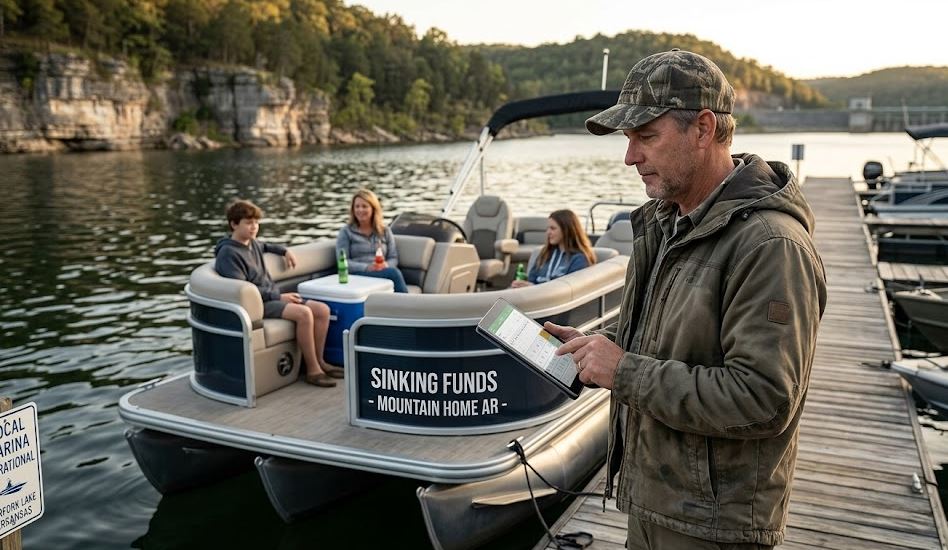
Let’s be real for a second. We’ve all seen it. The guy—you know the one, sometimes he’s local to Mountain Home, sometimes he’s just up from Little Rock for the summer—who buys the massive, shiny, triple-tube, high-performance pontoon with a stereo louder than a jet engine… and never actually uses it. He buys the dream. He doesn’t buy the reality. And the reality is that the happiest days of a boat owner’s life are the day they buy it and the day they sell it.
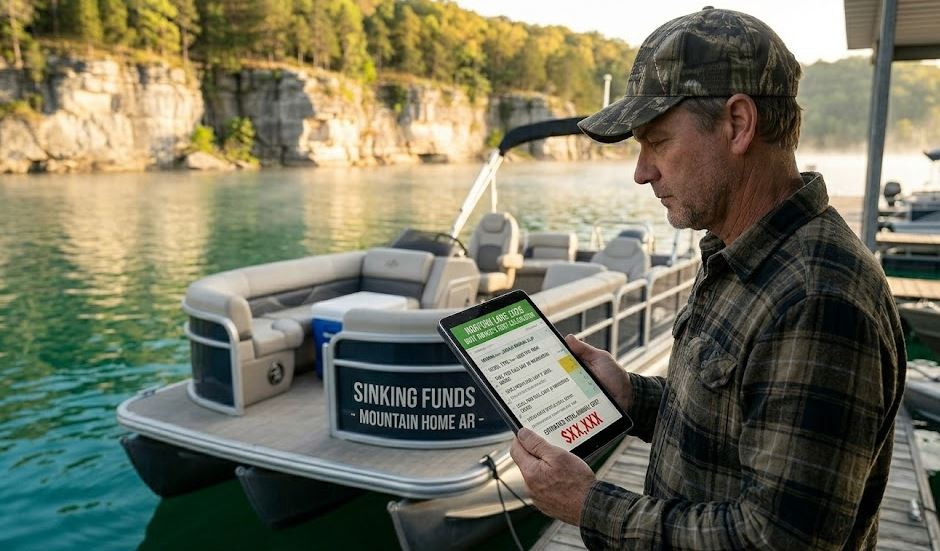
Naming your new vessel “The Hooker” might be funny on the dock (and we have an excellent list of 101 Funny Boat Names if you’re stuck), but naming your financial reality is far more critical. Before you sign that 2026 sales contract, you must sit down with our Boat Ownership Cost Calculator and calculate the true local expense of keeping a vessel like a tri-toon or pontoon afloat near Tracy Ferry Marina. Because on Norfork Lake, the math changes.
A “Smart Investment?” (The Financial Truth)
Let’s clear this up immediately: financial investments are supposed to appreciate. Boats are not investments. Pontoons are especially not investments; in 2026, the local market for used pontoons is saturated. A vessel is a hole in the water you pour money into—the question is just how big that hole is and which marina you are pouring it into. Our detailed True Cost of Ownership guide gives you a full breakdown of the general math, but here is the Norfork specific 2026 reality check.
Norfork Lake Annual Ownership Cost Comparison (Estimated 2026)
| Cost Category | Estimated Norfork Lake Cost (Annual) | Why it Matters Locally (Norfork vs. National) |
| Marinas (Slip/Storage) | $3,500 – $6,000+ | Locals know slips at Jordan Marina near the dam cost significantly more than a dry storage unit near Panther Bay. Choosing the right access point changes the math. |
| Fuel | $1,200 – $3,000+ | Pontoons aren’t fast, but they consume fuel like a small motorhome. You can use our calculator, but in my experience, a full day near Sand Island is far more than you think. |
| Insurance | $800 – $1,500+ | We are a deep-water lake with submerged trees (locals call them ‘snags’). Hull damage is real. You cannot skim on insurance. |
| Winterization | $400 – $800+ | Our winters in Arkansas are real. If you skip this, you are replacing an entire engine. Do not trust generic online advice. Use a local Mountain Home service provider. |
The Lifestyle Investment (The Real Value)
Okay, so financially it’s a disaster. Is it still a “smart” buy? Yes. Because it can be a smart lifestyle investment. If a 2026 mid-life crisis is what gets you to actually spend time with your family at Sand Island or watching sunsets near Quarry Park Point… then yes, it’s the best money you will ever spend.
But—and this is a critical ‘but’—it is only smart if you use it correctly and local authority knowledge. You need to understand the lake.
Pontoons vs. Tri-toons on Norfork Lake
This is a deep lake. We have chop. We have submerged timber. We have areas near Hickory Creek Marina AR that require specific navigation. In my experience wending these deep tailwaters, a tri-toon is superior for handling the lake’s chop, especially when you are crossing to the south end near the dam. A tri-toon gives you a smoother, safer ride for your family. A traditional two-tube pontoon is fine for the calm, shallow bays, but it can struggle on the main lake. Locals know.
Before You Buy: The Local Checklist
If you are determined to invest in a lifestyle crisis this season, at least do it with your local E-E-A-T filters on. Here is your absolute “local expert” checklist before you pull the trigger on a boat near Tracy Ferry.
- Check the Current Norfork Lake Level. This is the single most critical seasonal advice. A low lake level can turn your expensive, preferred marina slip into a dried-up mud puddle and turn your “worth it” calculation into a “never again” nightmare. We update these levels weekly.
- Rent First. Google wants usefulness, not just publishing. Renting is the most useful advice I can give you. Before you commit $80k to a vessel you might only use five times, rent a high-end tri-toon from our Boat Rentals page. Find out if your family actually likes to spend 8 hours on the water. It’s $500 to find out, vs. $80,000 to regret.
- Tackle the “Mid-Life Crisis” Angle Honestly. Is this a purchase to impress the other people at the Tracy Ferry Marina docks? If so, you will regret it. If this is a purchase to secure your weekends near Robinson Point with the people you love… well, then you have found your answer.
In my expert opinion as an Arkansas tailwater guide who has seen a thousand mid-life crises float past Quarry Park Point, a pontoon boat is a brutal ownership financial trap if you buy the national dream. It is a brilliant local reality if you buy the Norfork Lake data first and know your specific marina costs. Use the calculator. Check the lake level. Then, maybe, get ready to find an epic name.